
Ship inspection technology could be used to detect disease in people

by Einar Johansen
< 1 min read · Published on Oct 19, 2026
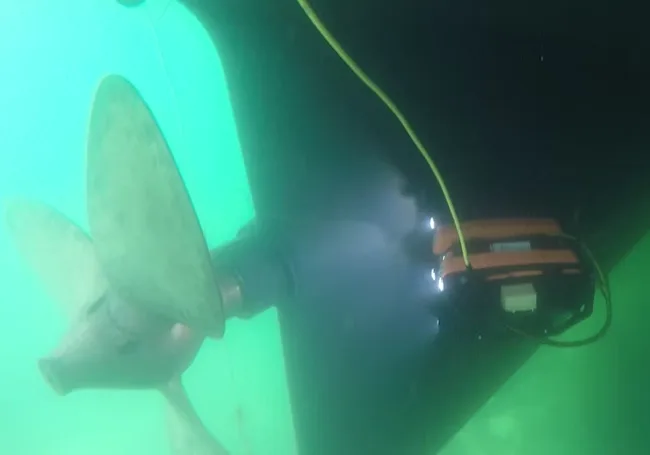
Together with SINTEF and a number of other partners, Posicom is taking part in a research project to develop artificial intelligence that automates underwater ship inspections – technology that could later be transferred to the healthcare sector.
Software that automatically detects fouling and flaking paint on ship hulls could eventually be used to find polyps and disease in people. That, at least, is the long-term goal of Ragnvald Otterlei, CEO of Posicom.
Together with SINTEF and a number of other partners, he is involved in a research project to develop an artificial intelligence that can automate underwater ship inspections. The project is well under way, and Posicom plans to test the technology this summer.
“We see strong similarities between the workflows on ships and in hospitals. In healthcare, for example, cameras are sent into the body so that things can be viewed on video. In the same way, cameras are sent underwater to inspect ships. Afterwards, a report is produced showing the findings,” says Otterlei, whose company owns the research project.
Copyright: Teknisk Ukeblad Media/TU.no. Read the full article here (in Norwegian).
“Over time, we saw that inspection service providers could become a business area, and we chose to explore this further in the maritime industry,” says Otterlei. Through the research project, the bookmarking process will be automated for the maritime industry. He then envisages taking it back to the hospitals.“